ir a principal |
Ir a lateral
Zebra, Tanzania
We were taking shots in the southwest of Serengeti, Tanzania. This location is known as Hidden Valley and was full of animals from the great migration.
This pregnant zebra came out of the dust for a second to take a look at me. She was the perfect poser! Head straight, ears up, legs in line, tail accentuating her curving body while the herd in the background created the perfect stage of dust!
—Caption by Giedo van der Zwan
 Source
Automat, New York City
Patrons line up "like payday depositors" in a bank, waiting to drop a few nickels in a slot for favorites like baked beans and Salisbury steak, freshly made each day and kept in "post-officelike boxes." This New York City Automat, described in the March 1942 National Geographic, was part of an East Coast chain that sold 72,000 pieces of pie a day.
 Source
École des Beaux-Arts, Paris
At the École des Beaux-Arts
 Source
Atom Bomb Test, Bikini Atoll
The second atomic bomb tested in Operation Crossroads
 Source
Boy and Turkey, Guatemala
A boy playing in a marketplace with a strutting old gobbler entertains Chichicastenango visitors by doing the son, a dance popular throughout Guatemala.
 Source
Attack Bomber Assembly, California
Nose assemblies for Douglas A-20 attack bombers
 Antarctica Lab
Dr. Edward Atkinson in his Antarctica lab
 Source
Festival, Thailand
Locals do everything they can to bring in good luck and get rid of bad luck. For ten days straight fireworks are thrown at the processions, and many men and women pierce their cheeks with huge objects like meter-long poles, guns, and lamps.
 Source
Divers, Louisiana
Swimming and diving are on the curriculum of Newcomb College. The college-for-women branch of Tulane University bears the name of H. Sophie Newcomb, the only daughter of Mrs. Josephine Louise Newcomb, whose gifts to the institution amounted to three million dollars.
 Source
Light and Shadow, Agra, India
The fall of light, Agra
 Source
Maynard Owen Williams Self-Portrait
Reflection of photographer Maynard Owen Williams in a storefront window
 Source
Bus Terminal, New York
This Month in Photo of the Day: Images from the National Geographic Archive
Travelers rest on benches in a Greyhound bus terminal.
 Source
Japanese Destroyer, Pacific Ocean
Final moments of a Japanese destroyer
 Source
Crowded Street, Kathmandu
Kathmandu has become such a chaotic place. The streets are crowded and everyone is doing their own thing. This image depicts the activities on the street, which juxtaposes with the stillness of the mother and child on the street.
 Source
Persian Scholars, Iran
With the exception of their veils, these girls of Barfurush, near Meshed-i-Sar, look, dress, and act like American girls in an Italian district—an interesting sidelight on the New Persia.
 Source
Gingerbread Fair, Paris
This Month in Photo of the Day: Images from the National Geographic Archive
At the Gingerbread fair, Place de la Nation
 Source
Horse Rider With Boleadoras
"When Luis Marden dropped in by air from Säo Paulo, he demanded gauchos…"
 Source
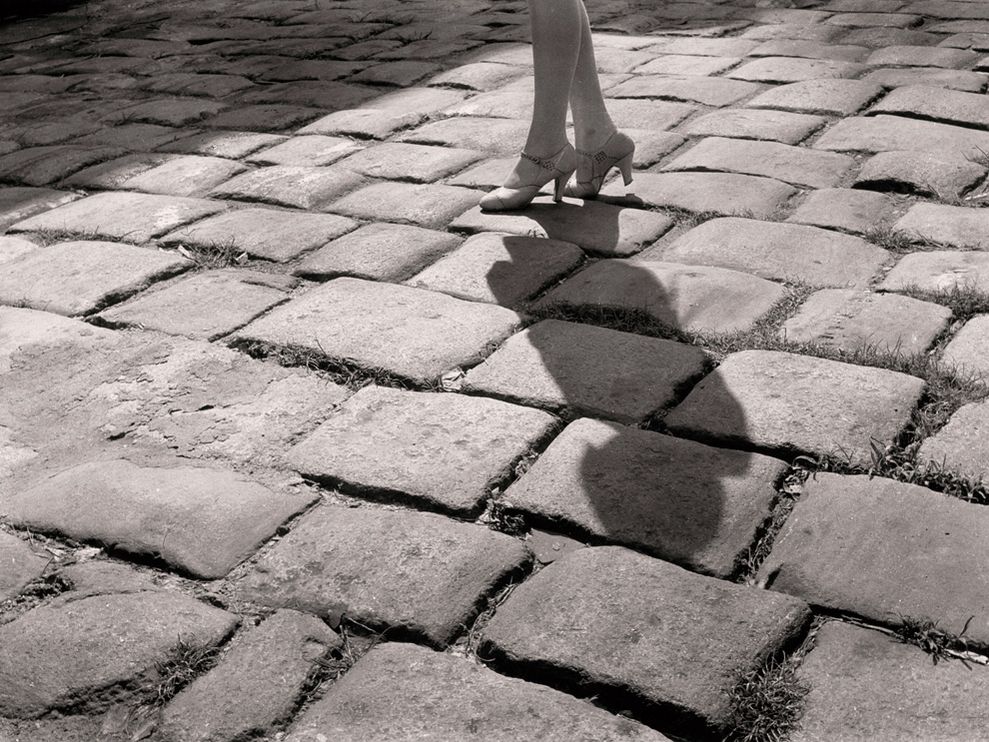
High Heels on Cobblestones, Louisiana
Because the region around New Orleans is composed of alluvial soil, there is no paving material close at hand. More than a hundred years ago the city offered a bounty to ships which would bring to the port rock ballast instead of sand. The first cobblestone pavement was laid on Gravier and Magazine Streets in 1817.
 Source
Sampling Arctic Ocean Water
Fridtjof Nansen takes a reading of deep Arctic Ocean water temperature as part of the expedition's scientific work. Astronomical, meteorological, and oceanographic data were consistently collected.
 Source
Tokyo Street
This is a gentleman rounding a corner in southern Tokyo along the railway.
 Source
Children Playing in Rain, Bangladesh
This Month in Photo of the Day: Nature and Environment
Children playing in seasonal rains are a great sight of monsoon and six seasons here in Bangladesh. The effect of climate change is making this rare as less or more rain is causing great disturbances around the country. Heavy rain causes floods and landslides, and makes millions homeless and takes the lives of many others. The climate should behave like normal for our future children to play like this in monsoon rains, and people must take responsibility to reduce pollution and save our world.
 Source
Lowland Gorillas, Bronx Zoo
Animal Photos
This photo of two lowland gorillas was taken at the Bronx Zoo in New York City. This is part of a series of photos I call Bronx Zoo Diaries.
 Source
Hidden Face
I found this woman waiting for her husband after finishing her work. Her eyes are very interesting for me.
 Source
Humpback Whales, Tahiti
When you swim with humpback whales it's not their size that overwhelms you but their beauty. You want to stay in that moment forever. These three humpbacks came over to me to check me out. They put on a beautiful dancing display that makes your heart stop and you wish for the moment to never end. When they were done ten minutes later they took off but left me with amazing memories. Tahiti, French Polynesia.
This photo and caption were submitted to the 2008 International Photography Contest. See photo galleries, play jigsaw puzzles, and download wallpaper of images from more than 105,000 submissions.
 Source
Lightning Model
Westinghouse engineers use this miniature system for tests. Upper wires detour the three-million-volt harmlessly to the ground. Lower wires, which carry the power load, are thereby protected against lightning, which might shut off the current or damage equipment. Even the cows are man-made.
 Source
 Luke Jerram makes the deadliest art in the world. His subjects have caused pain and suffering for hundreds of millions of people throughout history. They are infectious, they are resilient, and they are everywhere.
 THE DEADLY ARTIST - LUKE JERRAM
- Born in Stroud, England and now living in Bristol UK with his wife Shelina and two children Maya and Nico (Bellic?)
- Diagnosed with dichromatic colorblindness at an early age
- Led to obsession with the mysteries of human perception, both its idiosyncratic nature and its innate limitations
- Where does the visual perception of an object end and the memory of it begin?
- His goal: to explore the tension between a viruses’ devastating beauty and their devastating impact on humanity
 HOW TO MAKE THE DEADLIEST ART IN THE WORLD
-The Collaborators: University of Bristol virologist Andrew Davidson, glassblowers, Kim George, Brian Jones and Norman Veitch
- Took inspiration from high-resolution electron microscopic images, creating large, painstakingly accurate glass sculptures of viruses and bacteria such as HIV, E. coli, SARS, and H1N1 (Swine flu)
- Took over 5 years of development and research
- Jerram and his collaborators created glass genomes, carefully placing them on tiny pedestals within what would become viral envelopes
- They then closed up the tops before adding final touches of spikes and glycoproteins, which were shaped and melted on while keeping the whole work at roughly the same temperature

 THE ROOT OF THE PROBLEM
- The question of pseudo-colouring in biomedicine and its use for science communicative purposes, is a vast and complex subject. If some images are coloured for scientific purposes, and others altered simply for aesthetic reasons, how can a viewer tell the difference?
- How many people believe viruses are brightly coloured? Are there any colour conventions and what kind of ‘presence’ do pseudocoloured images have that ‘naturally’ coloured specimens don’t? How does the choice of different colours affect their reception?
- Our belief about what viruses and bacteria look like have undoubtedly been born out of media depictions of them. images of viruses are originally taken in black and white on an electron microscope and then they are coloured artificially
- Jerram is exploring the tension between the artworks’ beauty and what they represent, their impact on humanity
- The problem is that you end up with the public believing that viruses are these brightly coloured objects. These are often portrayed in newspapers as having an air of scientific authenticity and objective truth, whereas actually that isn’t the case. You can end up with some images that potentially promote fear
- With 3D sculptures, there’s also a tangibility you can’t get from flat pictures. There are diagrams of a virus and then there are photographs of a virus from electron microscopes. The purpose of a diagram is to communicate details in a very clear and concise way, whereas the scientific photos of viruses do something different. And a 3D representation makes you look at it in yet another, different, way
 HIV


 H1N1 (Swine flu)
 H1N1 (Swine flu)
 Small Pox
 E. Coli
 SARS
 H1N1 (Swine flu)
 Future Mutation - Photograph by Luke Jerram


 Source
 Source
 Source
 Source
 Source
 Antarctica Lab
 Source
 Source
 Source
 Source
 Source
 Source
 Source
 Source
 Source
 Source
 Source
 Source
 Source
 Source
 Source
 Source
 Source
 Source
 Source

 Luke Jerram makes the deadliest art in the world. His subjects have caused pain and suffering for hundreds of millions of people throughout history. They are infectious, they are resilient, and they are everywhere.
 THE DEADLY ARTIST - LUKE JERRAM


 HIV


 H1N1 (Swine flu)
 H1N1 (Swine flu)
 Small Pox
 E. Coli
 SARS
 H1N1 (Swine flu)
 Future Mutation - Photograph by Luke Jerram


